Beyond the Diamond: Understanding Today’s Most Popular Alternatives
If you’re shopping for fine jewelry, engagement rings, or fashion pieces, you’ve likely searched for natural diamonds, the differences between moissanite or lab-grown diamonds, or even cubic zirconia. While all of these gemstones can look similar at first glance, they differ in composition, durability, sparkle, and overall value.
This guide breaks down the key differences between natural diamonds, lab-grown diamonds, moissanite, and cubic zirconia so you can choose the best option for your needs and budget.
What is a Natural Diamond?
A natural diamond is a naturally occurring gemstone made of carbon, formed deep within the Earth over billions of years.
Why buyers choose natural diamonds:
Composition: Pure carbon
Hardness: 10 on the Mohs scale (the hardest natural substance)
Brilliance: Bright white sparkle with balanced fire (rainbow flashes)
Durability: Exceptional for daily wear
Natural diamonds are often selected for milestone jewelry, heirloom pieces, and buyers seeking long-standing tradition and rarity. They are considered the traditional luxury gemstone, used to show the utmost love and care.
What is a Lab-Grown Diamond?
A lab-grown diamond is chemically and physically identical to a natural diamond but created in a controlled laboratory setting.
Why choose a lab-grown Diamond:
– Composition: Pure carbon (same as natural diamonds)
– Hardness: 10 on the Mohs scale
– Brilliance: Visually identical to natural diamonds
– Durability: Excellent for everyday wear
Lab-grown diamonds appeal to buyers who want the properties of a diamond at a more accessible price point.
What is Moissanite?
Moissanite is a gemstone made of silicon carbide. While rare in nature, most moissanite used in jewelry is lab-created.
Why moissanite is popular:
– Hardness: 9.25 on the Mohs scale
– Sparkle: Higher fire (more rainbow flashes) than diamonds
– Durability: Strong and suitable for daily wear
Moissanite is often chosen for its intense sparkle and excellent durability, making it a popular alternative engagement stone.
What is Cubic Zirconia (CZ)?
Cubic zirconia is a lab-created gemstone made from zirconium dioxide. It has been widely used in jewelry for decades because of its clarity, brilliance, and versatility.
Why cubic zirconia remains a favorite:
– Hardness: 8–8.5 on the Mohs scale
– Appearance: Clear, bright, and diamond-like
– Versatility: Available in many shapes, sizes, and colors
Cubic zirconia is especially popular for fashion jewelry, statement pieces, travel rings, and trend-forward designs. Its affordability allows for bold looks and frequent style updates without compromising visual impact.
Which Stone Shines the Most?
When comparing diamond vs moissanite vs cubic zirconia, sparkle is one of the most searched factors.
– Diamonds (natural & lab-grown): Balanced brilliance and fire
– Moissanite: Extra fire with more rainbow flashes
– Cubic zirconia: Bright and clear, often with a slightly softer sparkle
Personal preference plays a major role. Some buyers love the fiery flashes of moissanite, while others prefer the classic sparkle of diamonds or the clean brilliance of cubic zirconia.
Which Gemstone Is Right for You?
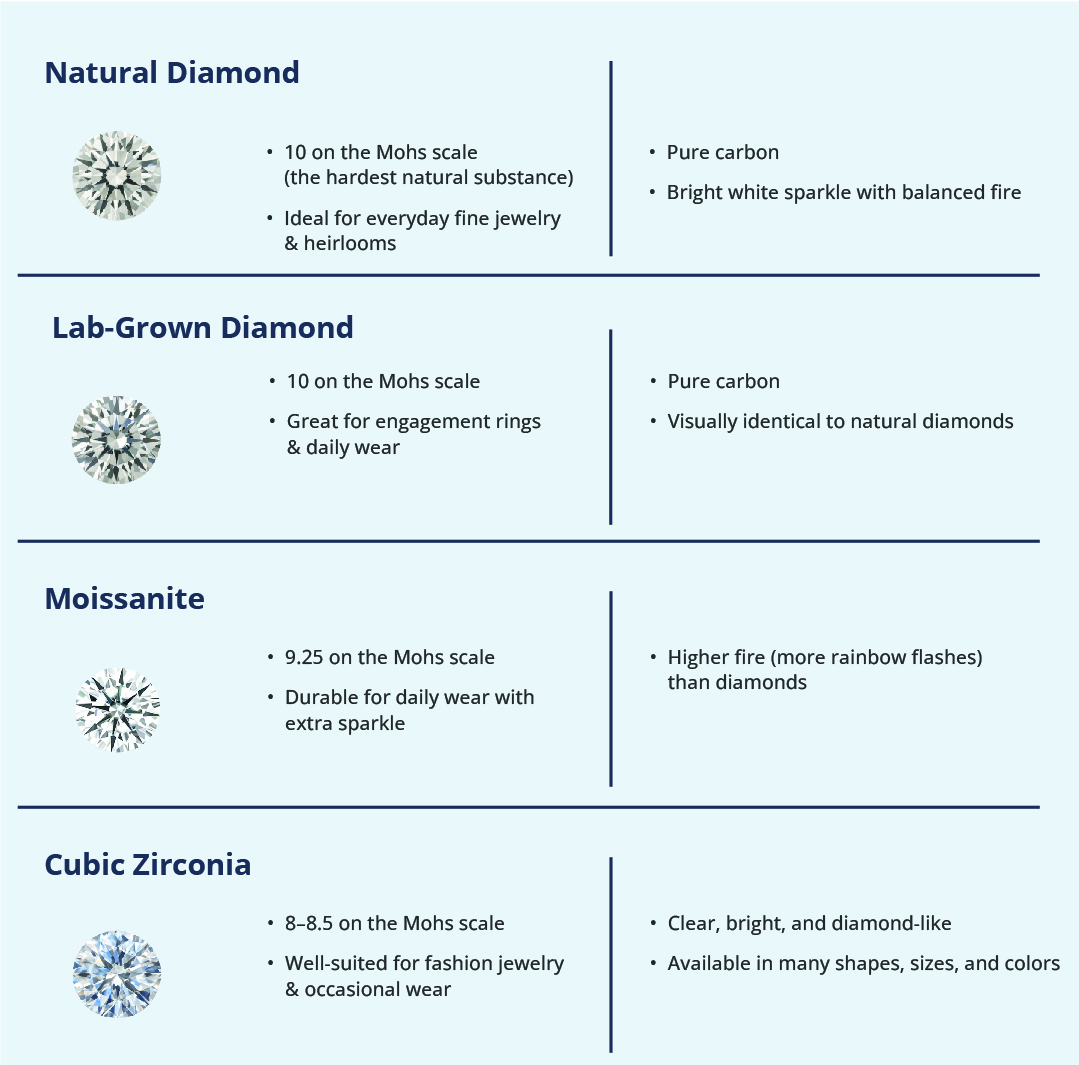
All four options can be beautiful choices depending on how often the piece will be worn. There is no one “best” stone, only the one that best fits your lifestyle, budget, and style goals.
Final Thoughts
Searches for “diamond alternatives,” “moissanite vs diamond,” and “cubic zirconia vs lab diamond” continue to grow because today’s buyers have more options than ever. Whether you’re shopping for a forever ring or a fashion-forward statement piece, understanding the differences helps you make a confident, informed decision.